How Did JavaScript Escape the Browser? Understanding Node.js
What is Node.js? How JavaScript Escaped the Browser
Wait, JavaScript Can Run Without a Browser?
Many beginners think JavaScript is permanently tied to the browser - that it can only ever run inside a webpage, reacting to clicks and updating the DOM.
That's not true anymore, and hasn't been for over a decade.
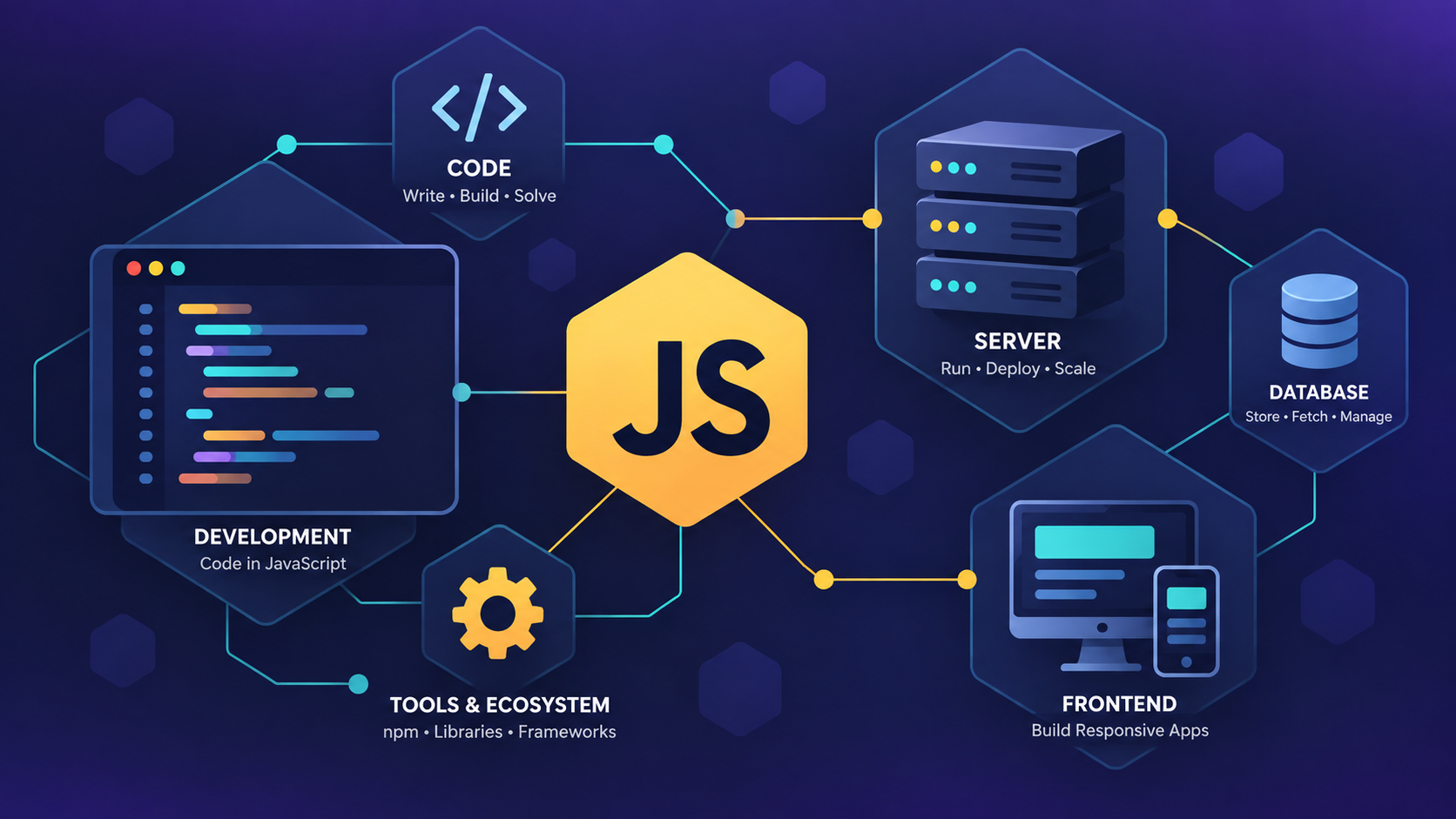
Node.js is a JavaScript runtime built on Chrome's V8 engine that lets you execute JavaScript outside a browser - on a server, your laptop, or straight from the terminal.
That one sentence hides a lot. Let's unpack it properly.
Analogy: The Restaurant Kitchen and the Food Truck
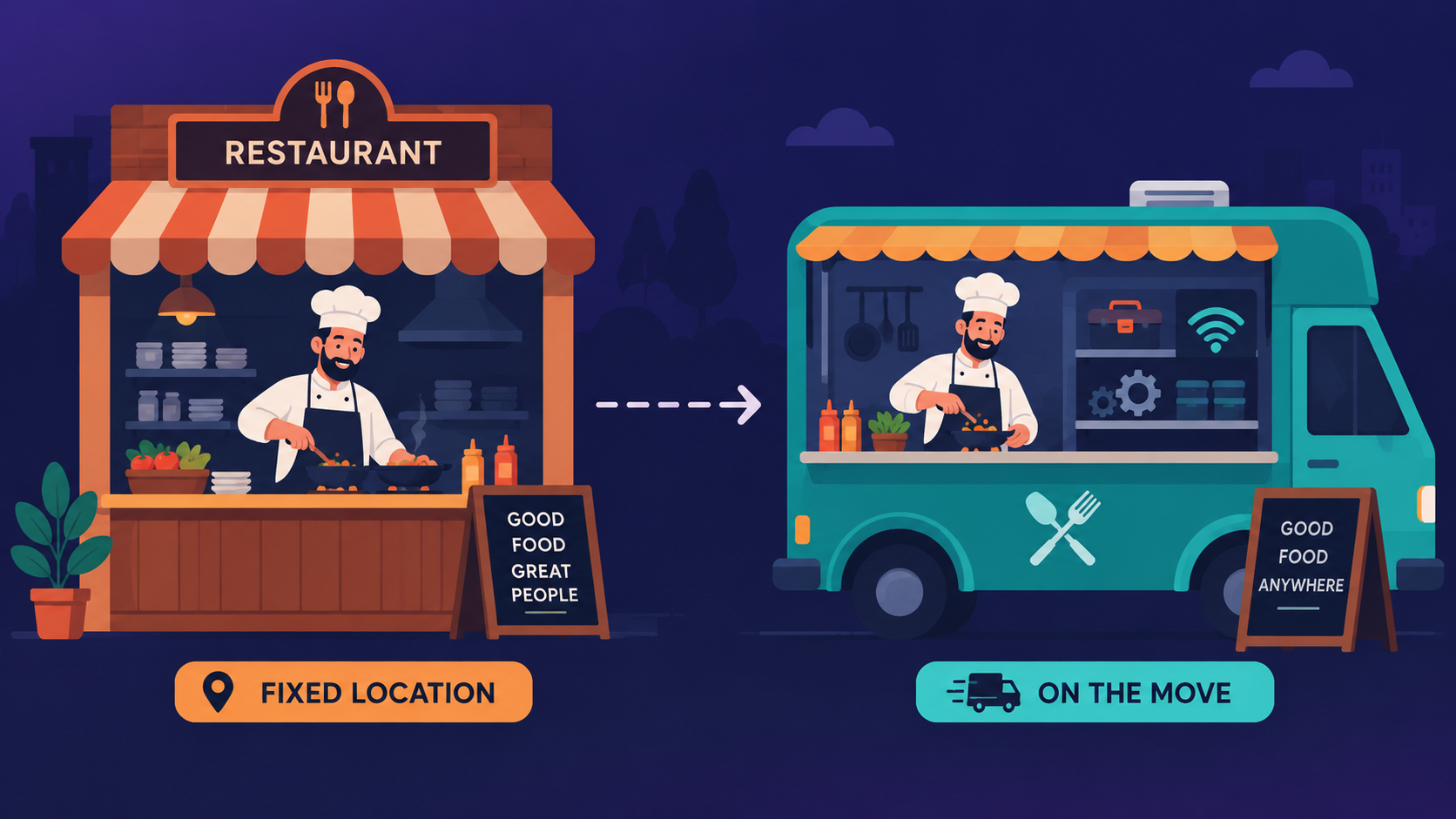
Picture one chef who knows one set of recipes.
JavaScript (the language) = the chef's recipes and cooking skill
The Browser = a restaurant kitchen - fixed location, fixed equipment (the
windowobject, the DOM,document)Node.js = a food truck - same chef, same recipes, but different equipment (file system access, networking, the operating system)
The V8 engine = the chef himself - hired by both the restaurant and the food truck because he cooks fast
The recipes never change. What changes is where the chef is allowed to work and what tools are sitting on the counter.
How Node.js Actually Runs JavaScript on a Server
Node.js takes Chrome's V8 engine - the same one that runs JavaScript inside Chrome - and packages it as a standalone program you can install on any computer.
It adds APIs the browser never had:
fsfor files,httpfor networking,osfor system info. This is the food truck's new equipment.It wraps all of this in an event loop, so JavaScript can handle many operations without freezing while it waits.
You run it from the command line with
node app.js- no browser tab required.
The recipes traveled. The kitchen didn't.
Why Do We Even Need This?
Before Node.js, a JavaScript developer needed a second language - PHP, Java, Python, Ruby - just to write the backend. Node changed that.
One language, whole stack. The same developer, the same syntax, front to back.
npm. The largest package ecosystem in programming, built around exactly this runtime.
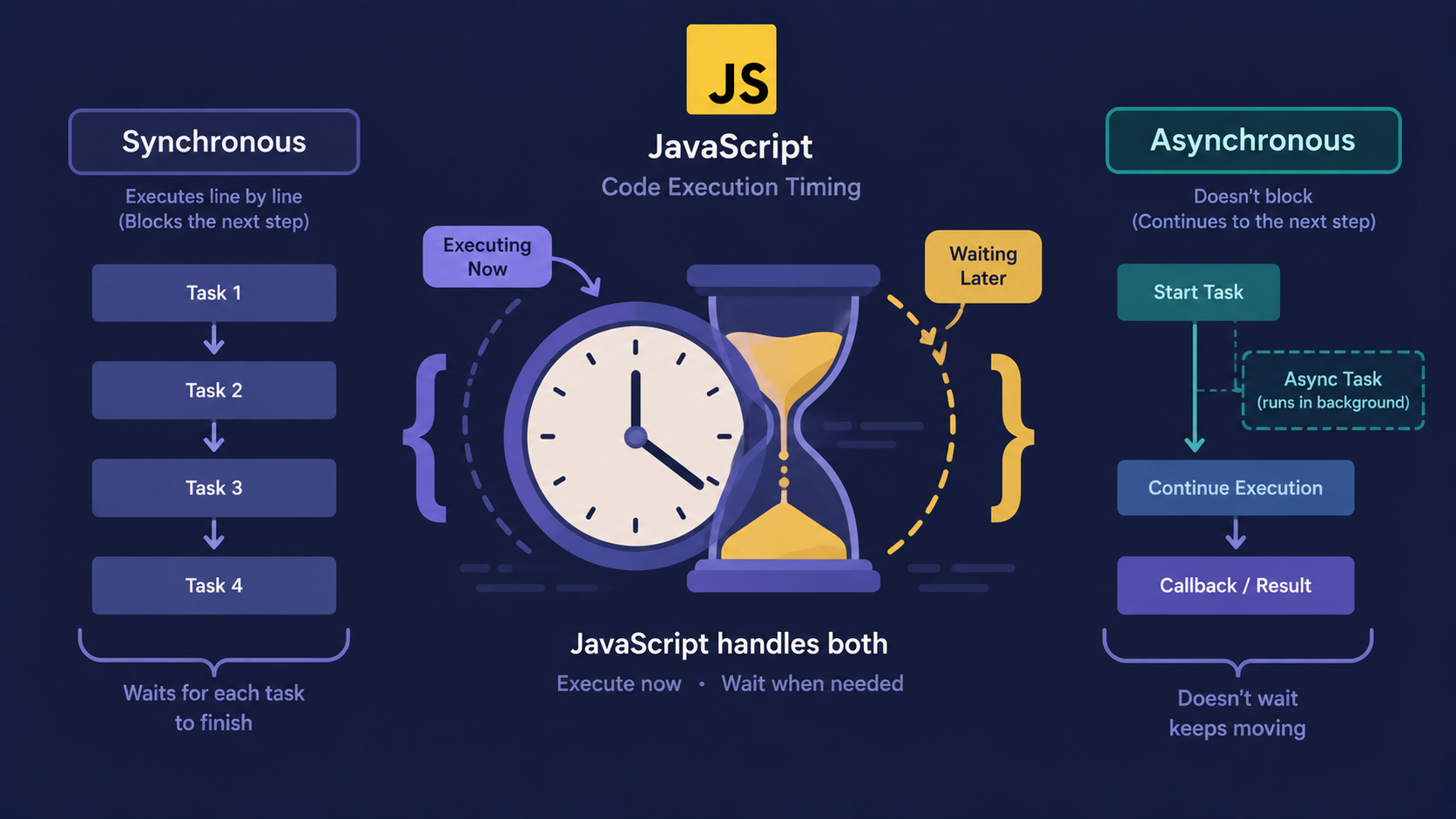
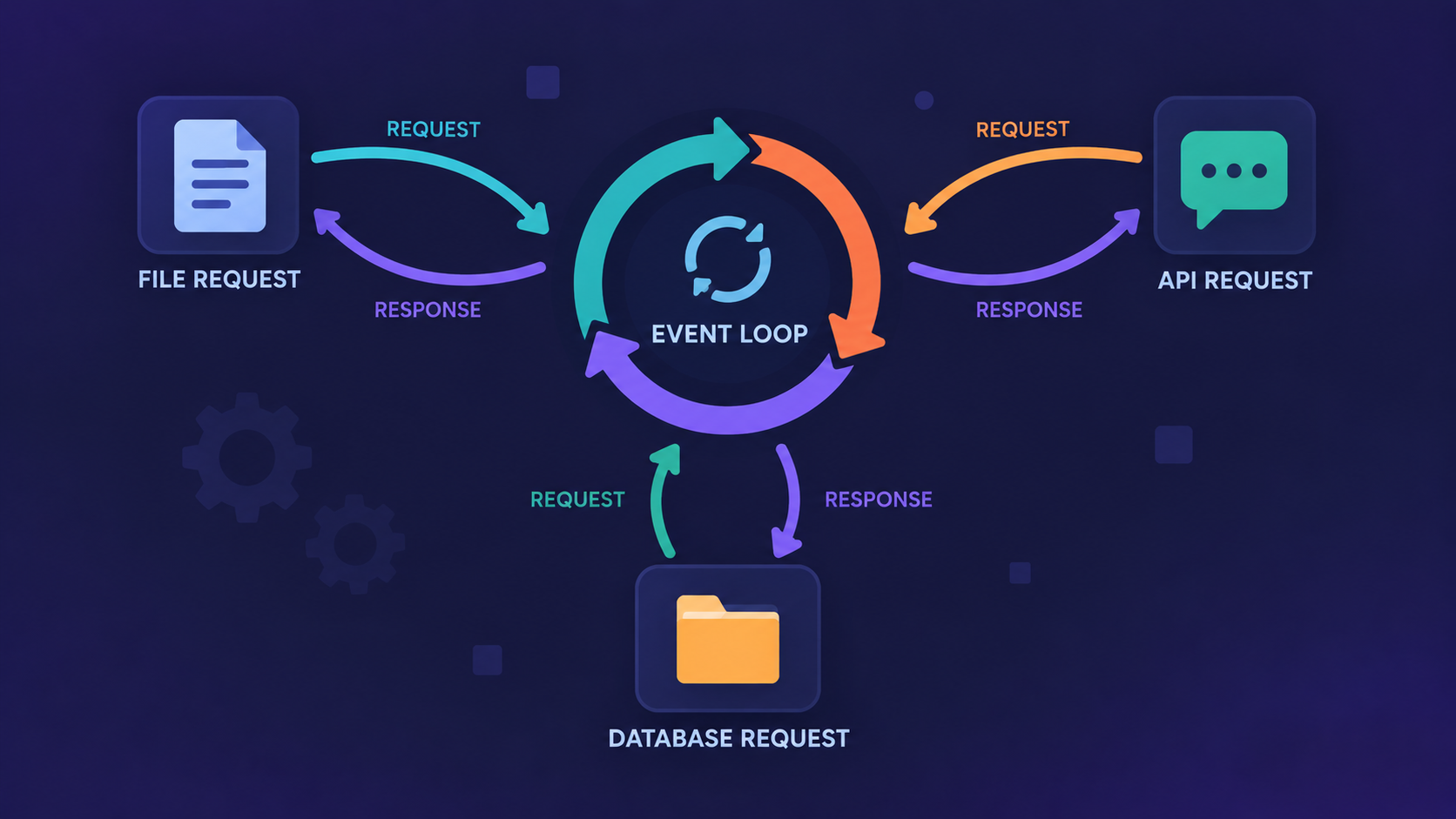
Non-blocking I/O. A single Node process can juggle thousands of open connections because it doesn't sit idle waiting on one to finish.
Real-world use: REST APIs (built with Express), real-time apps like chat and live dashboards (Socket.io), streaming platforms (Netflix's backend), and the build tools you already use daily - Webpack, Vite, and most of the JavaScript toolchain itself runs on Node.
Important Rule
A runtime is not a programming language. JavaScript the language stays exactly the same in both places - same let, same for, same functions. Node.js only changes where that language is allowed to run and what extra tools it's handed. Calling Node "a new language" is the single most common beginner mix-up here.
Node.js vs Traditional Backend Runtimes
| Node.js | PHP | Java | |
|---|---|---|---|
| Concurrency model | Single-threaded, event loop, non-blocking | Thread (or process) per request | Thread per request |
| Language | JavaScript, same as the frontend | PHP only | Java only |
| Startup | Fast, lightweight process | Fast, script-based | Slower - JVM boot time |
| Best fit | Real-time apps, APIs, I/O-heavy workloads | Traditional server-rendered sites | Large enterprise systems |
After knowing why Node handles concurrency this way, the next question is: what's actually happening inside it when your script runs?
What's Actually Happening Inside V8?
You don't need the engine internals to use Node well, so we'll stay high-level.
V8 doesn't read your JavaScript line by line like an interpreter guessing as it goes. It compiles your code toward machine code ahead of running it, which is why V8-powered JavaScript is fast enough to run production servers, not just button clicks. That single design choice is most of the reason Node.js became viable at all.
How It All Comes Together
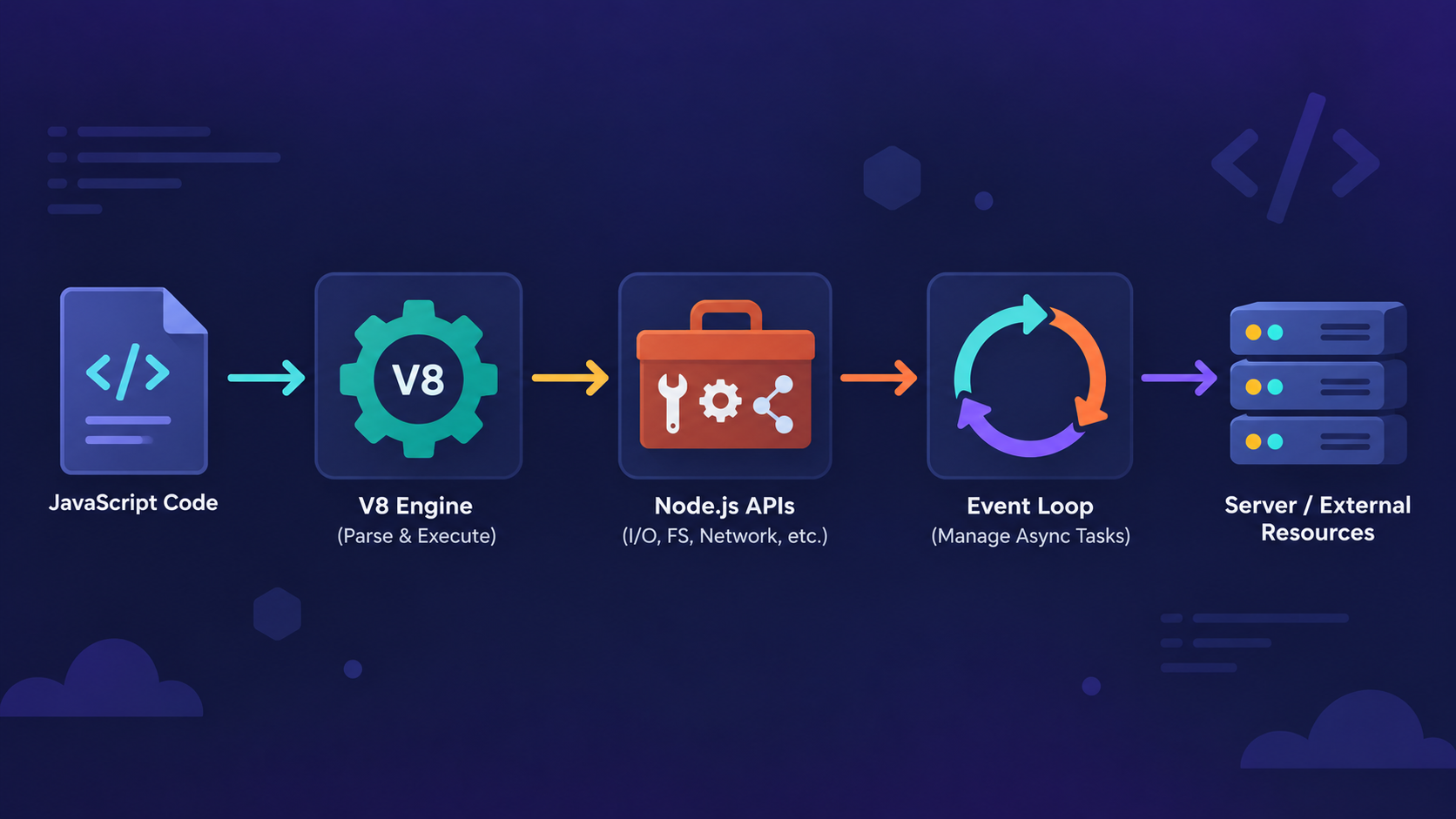
When you run node app.js:
Your script is handed to V8, which compiles it to machine code.
Any calls to Node-specific features (
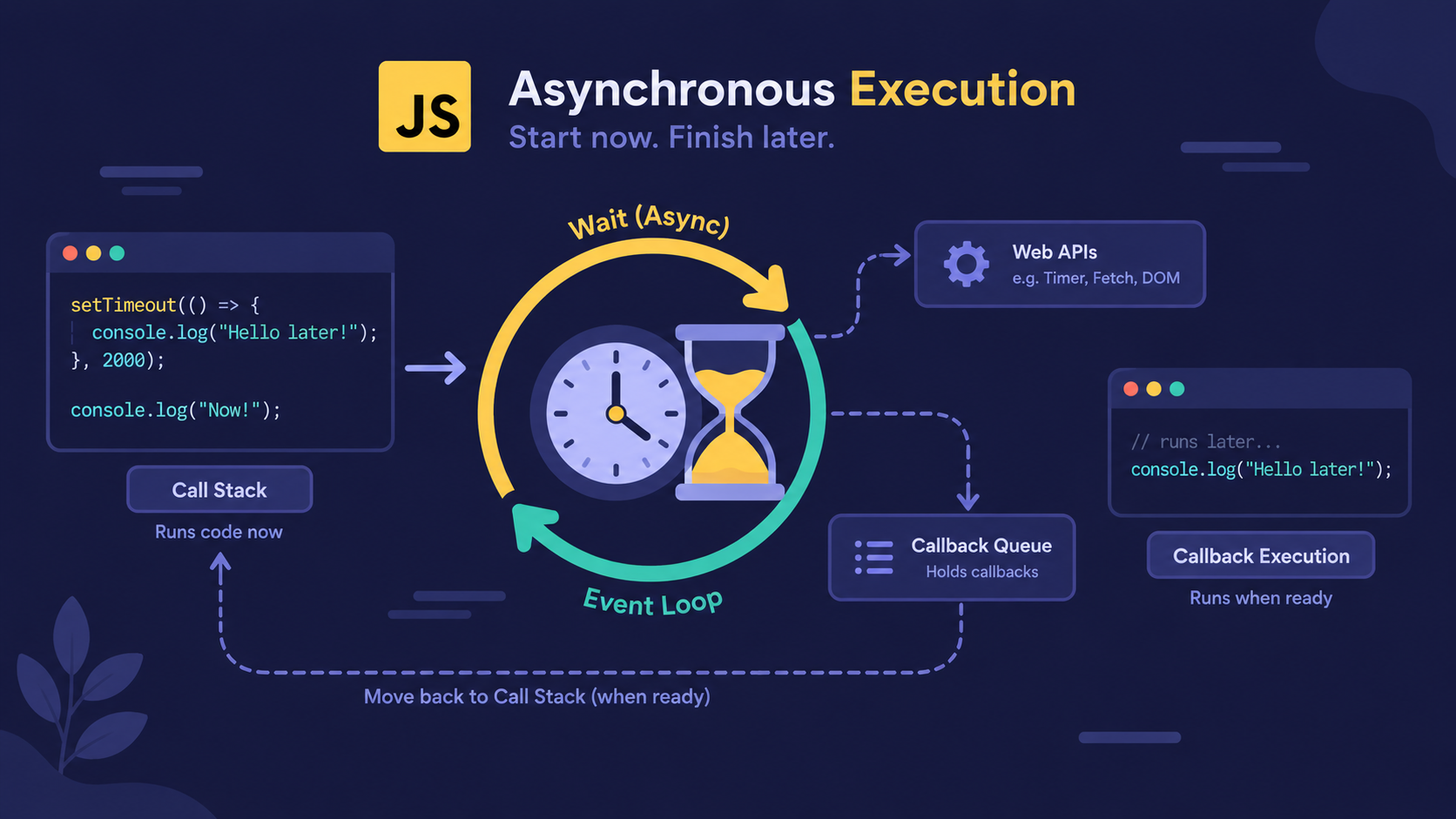
fs,http, timers) go through the Node APIs, not V8 itself.Operations that would normally block - reading a file, a database query - are handed off, and the event loop keeps checking whether they're done.
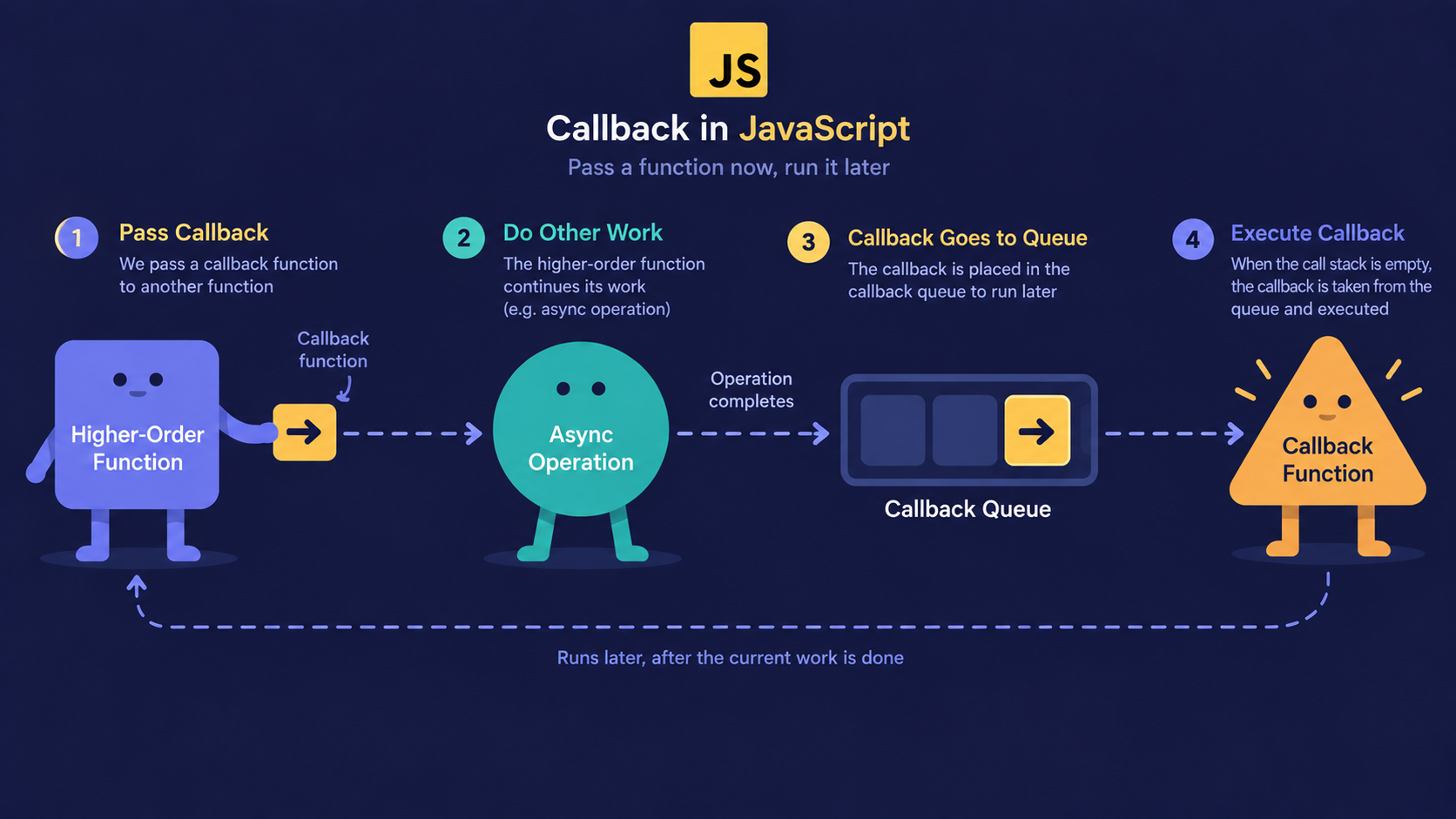
When a result is ready, the event loop runs the matching callback and moves on.
Same chef (V8), new kitchen (Node runtime), and a very efficient way of taking orders (the event loop) instead of waiting at one table at a time.
Assignment:
Try it yourself
Save this as os-platform.js:
const os = require("os");
console.log("Running on:", os.platform());
console.log("Node can see your file system, not just a webpage.");
Run it:
node os-platfrom.js
You'll see your operating system printed - something a browser's JavaScript could never do. That's the food truck's new equipment in action. We're skipping flags and configuration for now - confidence comes first.
Conclusion
Node.js is a runtime, not a new language - it runs JavaScript outside the browser.
It's built on the V8 engine, the same fast engine Chrome uses.
It adds APIs (
fs,http,os) the browser never had.The event loop lets one process handle many operations without blocking.
This is why JavaScript could finally become a real backend language.
If this felt like a lot at once, that's okay. What matters is understanding the flow - recipes, kitchen, chef, orders - not memorizing every internal detail today.